



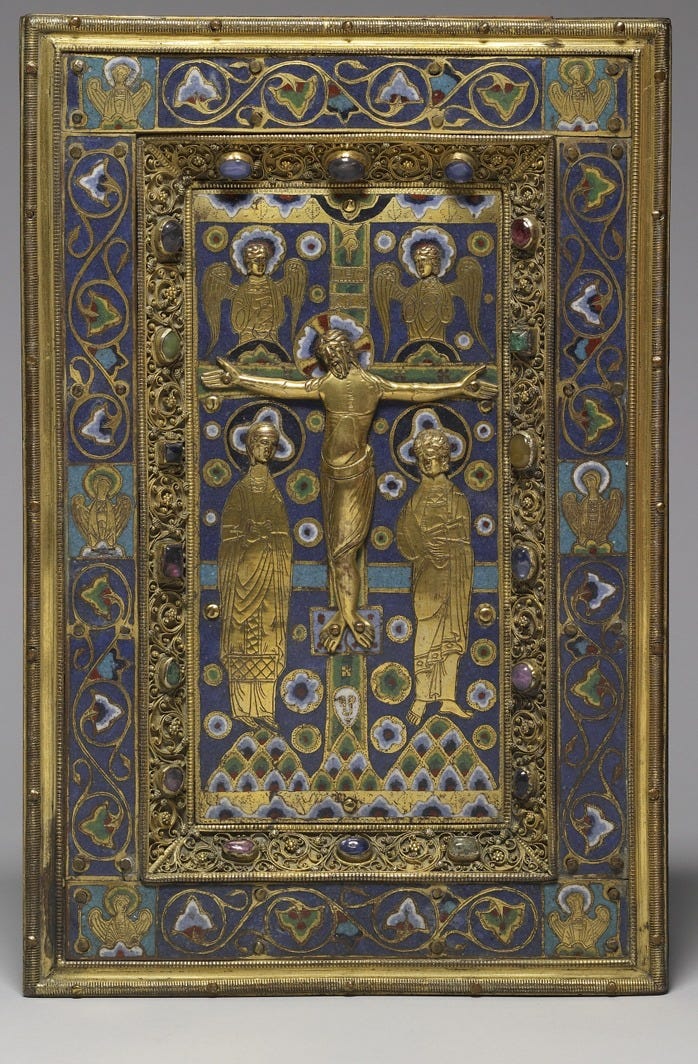
May the words of our mouths and the meditations of our hearts be always acceptable in Your sight, O Lord, our strength and our Redeemer. Amen.
It is good to be with you all this morning. For those of you who don’t know me, my name is Canon Jody Howard, and I’m Canon to the Ordinary here in the Diocese of Tennessee. I know a good number of you, but some of you I’ve never met before, and it is good to be here.
I was talking with Josh this morning, and I shared that this is my first time here at Holy Trinity serving in a service. Part of the reason I haven’t been here in seven years of diocesan ministry is because of the faithfulness of your now-retired priest, Father Bill Dennler. I often go to congregations in transition on Sunday mornings, and this is the first time you all have been in transition, so we certainly give thanks for his ministry. But I’m thankful to be able to be with you here today, and I will be meeting with your vestry following the service.
I’m thankful to be talking about the readings we have here today. I think they raise two issues that are very common for Christians—two concerns—and they’re interrelated. I think we have one concern in part because of the other.
The first concern, I believe, is this: how can we be good enough? In the Gospel it says it is enough for the student to be like the teacher. So when we think about that—Jesus as our teacher, Jesus as our paradigm, Jesus as the pioneer and protector of our faith—how can we be like Jesus? That’s been intimidating, to ask that question. How can we be like Jesus?
And then the second question that our readings raise for us this morning, I believe, is the question of judgment—God’s judgment. It is something that, at least for Episcopalians—maybe not for all varieties of Christians, but at least for Episcopalians—is a challenging thing to talk about, because we feel a little bit ambivalent about the idea of judgment. And I understand it.
I’m going to tell you a story about my seminary career. I took our ordination exams, our General Ordination Exams, and in the scripture section, the question we had was on the wrath of God. I thought to myself, boy, I’ve got to be careful answering this question, because I don’t want somebody to be put out by me talking about the wrath of God. But I got my response back, and you know what they wrote? “Basically good exegesis, though the answer displays a tendency to minimize the wrath of God.” I was afraid to actually talk about God’s wrath over wickedness and sin, because I was afraid that it would put off the readers—and boy, I got caught. I got caught on that. My answer had a tendency to minimize the wrath of God.
So I think it’s natural for us, though. Because if we think it is hard to be like Jesus, and if we think we need to be like Jesus to avoid the judgment, then it’s natural that we would be anxious about the idea of God’s judgment. And I think our readings today—in particular our Gospel text and the text from Romans—have something to say to us that is both timely, when we look at the state of the world, and reassuring about our personal faith and the ways in which we can impact the state of the world.
In the Gospel text we do hear about judgment. Jesus says, “I’ve come to bring a sword, not to bring peace to the earth, but to bring a sword.” That sounds like judgment. And yet I want to share with you that this is a very specific kind of judgment, because Jesus then goes and starts talking about the separation that’s going to happen: father against son, mother against daughter, families divided.
Jesus is not necessarily talking about God’s wrath being poured out in this section. Jesus is talking about the sword as a method of discernment, dividing some people who choose to live in one way from those who choose to live in another way. Jesus is talking about people who choose to follow the way that He is sharing with His disciples, versus those who reject that way of life, that alternative to the way the world works.
This, in fact, is what Paul is talking about in this section of his letter to the Romans. Paul is talking about how we can actually be those students who can be like the teacher. It’s not left up to our own strength, but it’s because we have been crucified with Christ; and having died with Him, this body of sin has been put to death, and we live with Christ—which means we live in a new way.
Now, I grew up in a particular tradition. We stopped attending church when I was very young. It was an evangelical tradition, and for me, in the past, when I read this passage and I saw “body of sin,” my mind immediately went to personal, individual sins. But what’s interesting about this text is that Paul actually doesn’t seem to be primarily talking about that. That’s sort of pulled into it, but the body of sin that Paul’s talking about is much bigger.
St. John Chrysostom, the great Eastern Orthodox bishop and preacher, talks about this in his sermon. He says Paul is not talking about our bodies as sinful; instead, Paul is talking about the body of sin as “the whole of iniquity”—in other words, all sin, everything that is in rebellion against God.
So think about it like this. We talk about being part of a body; that’s the way Paul’s using this. It is about being part of a group, part of systems, part of a way of life. And that is what is put to death on the cross when we are crucified with Christ: the body of sin. Not our individual selves, but the body as the way in which we relate to the world, the way in which we relate to one another—being alienated from one another and alienated from God.
You know, our bodies are the way we know the world. It’s the way we touch things. It’s the way we impact things. There’s hardly any other way except through our bodies—even if it’s through the written word, even if it’s through the spoken word, we require our bodies to be able to impact the world. And it is through our bodies that the world impacts us.
So when Paul is talking about this body of sin being put to death, what he’s saying is that the ways of the world that draw you away from one another and away from God—these things have been put to death, because we have been crucified with Christ. And the dominion of death, of which the body of sin is a representative and a collective naming, is no longer something to which we are enslaved. Instead, being raised with Christ, we become part of the alternative: the body of Christ and the kingdom of God, which is all about a different way of living than the ways of the world.
The ways of the world call people away from one another, away from community, toward oppression, toward abuse. Instead, we’re called to the kingdom of God, in which all are beloved, in which we recognize the image and likeness of God in all the people with whom we come into contact. We are called to the kingdom of God, in which we don’t lord it over one another. We’re called to the kingdom of God, in which we love one another.
And this judgment, which Christ is exercising with the sword, is all about the people who will choose to be part of this loving kingdom, this loving way that God offers, versus those who believe the old ways—the ways of oppression, the ways of mistreating others, the ways of enriching themselves on the backs of others. The people who love that way are going to be separated from the people who love a way of justice, the way of love, the way of equality.
So this body of sin has been put to death on the cross with Jesus. And it’s important that it happens with Christ, because, as Chrysostom says, being crucified with Christ—and not simply crucified by the wickedness of the world, but crucified with Christ—draws our baptisms to the cross. In other words, it connects our unity with Christ to the work that Christ has done, and it means that we can live in newness of life.
So it means that it’s not all about what we can do. It is very hard to be perfect. Have you ever tried? Have you ever tried to be perfect?
There was a sitcom that was on for several years called The Good Place. I don’t know if any of you saw it, but the whole premise of the show was that people were in this sort of afterlife, and they think they’re in the equivalent of heaven when they begin. It turns out—we’re not going to go into detail—it turns out it’s not quite right, and they end up in this whole scenario. They’re talking with the entities that are sort of in charge of this place, and they discover, in the course of things, that the way the world is now makes it impossible for people to get enough points to actually go to the real Good Place. They talk about how somebody went to the supermarket and bought a tomato—they went to the grocery store and bought some fruit and vegetables—and because of the way it was produced, they got so many negative strikes against them that they could never make it up.
That’s how hard it is in our world to be perfect, because we’re always implicated. We’re implicated in systems that are unjust, we’re implicated in things that take advantage of people, we’re implicated in things that we as individuals do not have the power on our own to set right. And yet we’re called to be like our teacher.
So there’s hope. Because the thing is, Jesus doesn’t say to us, “You, individual Christian, you have got to set all these things to right before your tally markers will be enough to get you where you want to go.” That’s not what Jesus says to us. Jesus says, “I have called you friends.” Jesus says, “You’re my beloved.” Jesus says that we are already forgiven. We just need to live life and be strengthened.
And if we can do that—if those of us who recognize that our old selves, who were enthralled to the ways of the world, have been put to death in Christ—then we have a new way that we can live. If we all do that, then the body of Christ provides an alternative to the ways of the world. We’re not called to fix everything, but we’re called to be a witness. We’re called to provide an alternative. We’re called to show people that things don’t have to be the way they often are.
One of my favorite theologians, a man named Stanley Hauerwas—who for a time was an honorary canon theologian at our cathedral—has this well-known saying where he says the first task of the church is to make the world know that it is the world. In other words, the first task of Christians as followers of Jesus is to let the world know that things don’t have to be the way they are. When we look around, things don’t have to be the way they are when they draw us away from unity with one another and away from God. Things do not have to be that way. We can be citizens and witnesses to a different kingdom and a different way of life.
Jesus teaches us how to do this. A number of years ago, I was reading a story about a Methodist missionary, E. Stanley Jones, talking about his tenure in India. He made an observation about how he let go of arguing for all the minutiae of the Christian faith with the folks he encountered. Instead, he focused on the cross—the idea that in Jesus, God loved the world so much that not only did God come to be with us in Christ, but Christ went to the cross for us. And he used this phrase that really enchanted me. He called the cross “Christ’s professorial chair.”
Christ’s professorial chair. So I did a little bit of research, and I tracked that phrase down to Saint Catherine of Siena, a Roman Catholic mystic. That’s what she says: she says the cross is Christ’s professorial chair, upon which He teaches us doctrine written in letters on His body, too large for anyone—even the illiterate—to miss, and for even those of poor sight not to see.
In Jesus we see God’s love. In Jesus we see the way we’re supposed to be and who we’re supposed to imitate. And it’s not about perfection; it’s about love and witness. We don’t have to be perfect. We just have to follow Jesus. That’s it.
And we’ve already been forgiven, and that is what gives us the power and the energy and the thankfulness to follow Jesus—because God has already loved us. God has already forgiven us. God already knows everything we have done, and anything we’re capable of—the worst things we’ve done, the worst things we’re capable of—and God says, “I love you anyway, because you belong to me. You are mine, in my image.”
So sometimes we get uncomfortable with this idea of judgment. And yet there are things in the world that deserve God’s judgment, God’s wrath—the things that divide us from one another, the things that harm the creatures of God. And Paul recognizes this, and he uses these phrases throughout—twice in Romans and once in Philippians. He talks about the body of sin. He talks about the body of death, which is related to the dominion of death, which is really about the effects of sin—sin causes decay and death because it draws us away from God and away from one another. And then the last is the body of lowliness, or humiliation, in Philippians, and there Paul’s talking about our frailty as human beings.
And the thing is that Jesus sets us free from these. To the extent that we are unable to be set free—our human frailty, we can’t be set free from—but we do not have to be bound by it, because Christ is in it with us. Christ is in it with us.
You know, Paul says that death no longer has dominion over Him, which by its very nature means that Christ so identifies with us—God so identifies with us in Jesus—that Christ even endured death on the cross. Christ endured the worst sort of thing that we could ever experience, to be with us and like us, one of us, so that we can be with Him and learn what it means to imitate Him. It is a wonderful and joyous thing to know that this does not depend upon us, but is a gift given by God.
So, coupled with this aversion to judgment, there’s often an aversion in our day to some of the violent imagery in scripture—the idea of crucifixion, for example. When I was in seminary, I read a book by an African American womanist theologian named JoAnne Marie Terrell, called Power in the Blood. She was talking about the way in which some of the violent imagery in scripture, some of the hymnody that uses this imagery, is so important to communities that have endured oppression. She talks about the critiques of it, which she says are valid from a certain perspective. They’re valid when you think about people using this imagery who have not either endured oppression or identified with those who have—because that’s the key about Jesus. Jesus did what Jesus did to identify with us as human beings. But the thing is, this imagery is important for people who are going through hard times.
A number of years ago, you may have heard of an attack, a terrorist attack, on a Coptic Egyptian cathedral in Cairo. A terrorist attack. It was amazing to me, because about a week afterwards they went ahead and had the services they were having during—I believe it was their Holy Week—and I heard a sermon given by the Dean, the equivalent of the Dean of their cathedral. It was called “A Message for Those Who Are Killing Us,” and the theme of the sermon, he said, was: “Thank you.”
Now imagine that. “Thank you.” That was the message. But when he unpacked it, (I’m paraphrasing), it was, “Thank you for allowing us to imitate our Lord.” And then he went on, and he said, “You don’t understand what you have done, because you’re living by the ways of a different world. If you only understood the way of Jesus, you would know that this was wrong. But thank you for allowing us the opportunity to imitate our Lord.”
So this is what the sword is all about in Matthew’s Gospel: dividing the folks who recognize the way of Jesus, and the fact that God is waging war with peace against the world that wages war with war. God is waging war with love against the world that embraces hate. And God invites us to do the same by imitating Jesus.
That hymn, “Power in the Blood,” whose first verse you may recognize: “Would you be free from your burden of sin?” Would you be free from the body of sin—not just individually, but corporately, societally? “There’s power in the blood, power in the blood.” “Would you o’er evil a victory win? There’s wonderful power in the blood.”
Another hymn that uses some of this imagery was written by William Cowper (pronounced “Cooper”), an English Anglican. He wrote hymns with John Newton, who wrote “Amazing Grace.” This hymn is called “There Is a Fountain Filled with Blood,” and he wrote it when he was in a deep depression, in despair; writing it encouraged him. He struggled with what we would probably call clinical depression his entire life. This is the first verse of that hymn—it’s in Lift Every Voice and Sing II, Hymn number 39: “There is a fountain filled with blood, drawn from Emmanuel’s veins; and sinners plunged beneath that flood lose all their guilty stains.”
We shouldn’t shy away from what Jesus has done for us on the cross. We shouldn’t shy away from the idea of judgment when we think about it as distinguishing between the ways that divide us from one another and from God, and the ways that bring us together. The good news for us today is that we don’t have to be perfect. We just have to love. And doing that will be the witness that the world needs—to know that there is a different way.
Amen.
Resources:
I came across a lot of interesting resources while preparing this sermon, some of which I referenced, others of which were in the background. I’m sharing them below.
Commentaries:
I always consult the New Oxford Annotated Bible, the Jerome Biblical Commentary for the 21st Century, and the Sacra Pagina series (Romans & Matthew)
A relatively new commentary I consulted and enjoyed a great deal was Susan Eastman’s Commentary on Romans from the Interpretation Bible Commentary series.
I also read the applicable parts of Origen’s Commentary on Romans, Peter Abelard’s Commentary on Romans, and John Chrysostom’s Homily XI on Romans 6:5.
The quote from E. Stanley Jones was first encountered in a book that I’ve lost track of, but it was written by some current Methodist pastors. The background comment of St. Catherine of Siena was from my commonplace book, but was quoted in Reclaiming Catherine of Siena: Literacy, Literature, and the Signs of Others by Jane Tylus, p. 256.


